(reprinted from the December 19, 2005, issue of Passenger Transport)
Ensuring transportation options for older Americans emerged as one of the top three issues considered by delegates at the recent fifth White House Conference on Aging in Washington. These recommendations will go to the President and Congress to help guide national aging policies for the next 10 years and beyond. It ranked this high billing out of 73 resolutions.
A majority of the 1,200 delegates participating in the conference, held every 10 years, supported a resolution to ensure that older Americans retain their mobility and independence through transportation options including public transportation and demand response services.
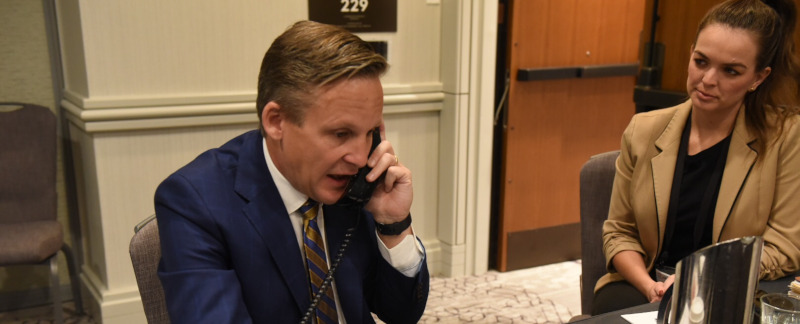
APTA President William W. Millar, a delegate at the conference held Dec. 11 to 14, called the resolution vote "a big victory for public transportation. Having people understand the important role public transportation plays in our communities, and especially how it can positively impact older Americans, will help to keep our issue front and center with legislators and city planners across the country." J. Barry Barker, executive director of the Transit Authority of River City in Louisville, Ky., also was a delegate at the conference.
The transportation resolution ranked in priority just behind support for reauthorization of the Older Americans Act within six months of the conference, and a call for a coordinated, comprehensive strategy regarding long-term care issues. It ranked higher than such issues as Medicaid and Medicare reform and strengthening Social Security. The delegates' support of the Older Americans Act included a suggestion that reauthorization legislation specifically include funding for seniors' transportation.
The conference focused on the aging of today and tomorrow, including 78 million baby boomers who will begin to turn 60 in January 2006. Its theme was "The Booming Dynamics of Aging: From Awareness to Action."
Delegates to the conference also approved other resolutions related to issues of transportation and livable communities, such as encouraging community designs to promote communities that would allow older Americans to age in place; improving access to care for older adults living in rural areas; and supporting strategies to help seniors maintain safe driving skills.
In advance of the White House conference, APTA mounted a major effort to promote the importance of transportation options for seniors. Through the Public Transportation Partnership for Tomorrow (PT)2 program, APTA representatives participated in official listening sessions in January and April, held to help develop the conference agenda.
At the April conference, "Transportation Solutions for an Aging Society," APTA released a policy paper listing ways transit agencies are working to enhance the mobility options and positively affect lifestyles of America's older adults, and calling for federal policy and funding initiatives to make public transportation more available and, thus, communities more accessible for America's older citizens.
A resolution approved by the APTA Board of Directors at the 2005 APTA Annual Meeting and EXPO in Dallas stressed the importance of senior mobility options as a national priority. The resolution specifically cited a need for increased funding for expanded public transportation options; coordination of the 62 federal programs that support public transportation and human service transportation at the local level; and incentives for state and local officials to design and develop communities that enable older citizens to "age in place" within their own neighborhoods.
APTA also worked with (PT)2 on activities to focus attention on mobility options for older Americans prior to the conference. Major examples of this campaign included the publication last year of Aging Americans: Stranded Without Options, a report co-sponsored with AARP and created and released by the Surface Transportation Policy Project; the launch in May, Older Americans Month, of the Easy Rider Initiative, an industry-wide effort that focuses on new and innovative ways to help seniors stay mobile and independent in their communities; and changing the focus of APTA's annual Communities in Motion Day observance to Seniors in Motion Day, held this year on Oct. 6.
In connection with the conference, on Dec. 7 APTA released the results of a national study conducted by Harris Interactive® showing that 82 percent of Americans age 65 or older worry that they will be stranded and unable to get around when they can no longer drive. Nearly all of the respondents (98 percent) said that maintaining their independence is "extremely important."
In addition to its two delegates to the conference, APTA also had an exhibit as part of U.S. DOT's booth, "Transportation of the Future & Mobility Matters," in the conference's 100,000-square-foot exhibit hall. Other participants in the U.S. DOT booth included the Washington Metropolitan Area Transit Authority, demonstrating its low floor bus and trip planner; Orbital TMS, showcasing its electronic destination signs; AARP; AAA; and the Community Transportation Association of America.
Some of these pages may include links to documents in the Adobe PDF format. Please download the Adobe PDF reader if you have not already done so.