Policy Research
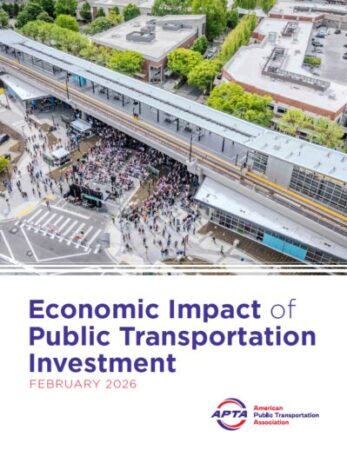
Economic Impact of Public Transportation Investment
Every $1 billion invested in public transportation generates $5 billion in long-term economic value and supports tens of thousands of jobs nationwide. These findings provide clear evidence that sustained investment in public transit and passenger rail delivers significant returns for workers, communities, taxpayers, and the U.S. economy. This new analysis finds that public transportation has a significant impact on the nation’s economic productivity. Investment in transit can yield 41,400 jobs per $1 billion invested, as well as supporting $3.1 billion in worker income and $251 million in Federal, State, and local tax revenue.
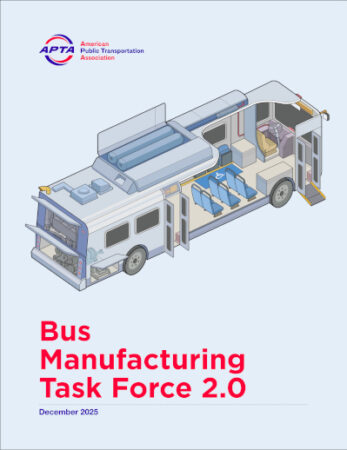
Bus Manufacturing Task Force 2 December 2025 Final Report
APTA’s Bus Manufacturing Task Force 2.0 was established in May 2025 to recommend approaches for procuring a more standardized U.S. bus fleet. By doing so, the public transit industry can help to stabilize and reduce the cost of procuring buses while strengthening the financial health and competitiveness of the supply chain. APTA member bus manufacturers will seek to include the recommendations into their configuration for a “standard” bus, which configuration FTA has used in the past in the scoring of competitive bus grants.
2025 Public Transportation Fact Book
The annual Public Transportation Fact Book contains national aggregate statistical data covering all aspects of the public transit industry in the United States and Canada. Major sections include an overview of U.S. transit facts, transit finances and operating statistics by modes of travel, transit vehicle characteristics and deliveries, federal grants and the Federal Transit Act, and statistical trends of Canadian transit operations.
Public Transportation Ridership Update
Public transportation ridership recovered to 85 percent of pre-pandemic levels in April 2025, according to the latest data from APTA’s Ridership Trends Dashboard. Bus and demand response ridership lead the recovery, at 86 and 93 percent of 2019 levels respectively. Small cities and rural areas have recovered to 88 percent of pre-pandemic ridership levels. Public transit ridership was 7.7 billion total trips in 2024, a 7 percent increase from 2023 to 2024.
Impact of Spare Ratio Rules on Vehicle Availability
Transit agencies find it increasingly difficult to meet the Federal Transit Administration’s (FTA) 20 percent spare ratio requirement. APTA commissioned a study to address the evolving challenges associated with the spare ratio requirement. A survey of 154 APTA transit agency members provided a national overview of the challenges agencies are facing. APTA selected six agencies for a more in-depth look at specific agency situations and lessons learned. The report provides a series of best practices for agencies as well as policies to consider to support transit agencies in maintaining their fleet needs.
Inflation Reduction Act Tax Credits – Guidebook and On-Demand Series
The Inflation Reduction Act (IRA) introduced “direct pay” – the ability for transit agencies and other entities that do not usually file tax returns to claim tax credits in the form of cash benefits. This action opens the door for transit agencies to benefit from the tax credits in the IRA.
APTA partnered with tax professionals from Plante Moran to create an Energy Tax Credits Guidebook and accompanying series of videos and toolkits that will walk you through the process of qualifying for, applying for, and claiming relevant IRA tax credits. These materials are available to all APTA members.
Impact of CDL Under-the-Hood Testing Requirement on Public Transit Agencies’ Ability to Hire Bus Operators
A survey of 117 APTA public transit agency members and subsequent interviews show that 85 percent of agencies continue to face worker shortages, with bus operator positions being particularly challenging to fill. APTA’s research shows that 84 percent of transit agencies cite CDL complexity as a hiring obstacle, with the “under-the-hood” requirement rated as the most challenging aspect of obtaining a license. The requirement is particularly burdensome as transit agencies transition to zero-emission buses, where traditional engine components are being replaced by electric powertrains.
Bus Manufacturing Task Force Recommendations
The recent pandemic adversely impacted the financial viability and competitiveness of the United States bus manufacturing market. Labor market tumult, hyperinflation in material and component prices, commodity shortages, hardships by many parts suppliers, and the significant increase in the cost of capital, have undermined the financial health of the bus Original Equipment Manufacturers (OEMs).
Preserving, protecting, and nurturing a highly competitive US bus manufacturing market and the capacity to transition to zero-emission buses are essential. In October 2023, APTA created a Bus Manufacturing Task Force to recommend immediate actions that can support a more competitive and stable bus manufacturing capacity in the US.
Transit Savings Grow as Auto Costs and Gas Prices Increase
Riders can save more than $13,000 per year by using public transit instead of driving, according to the latest information on public transit fares, auto costs, and gasoline prices. Increases in auto and fuel costs mean that people can save more than before by using public transportation instead of driving. Prices for new and used cars have increased significantly since the pandemic. Financing costs have increased dramatically due to interest rate hikes. In 2023, gasoline prices have increased 25 percent because of constricted supplies and added demand.
Restoring RAISE Grant Investments in Public Transportation
Although DOT has partially reoriented the RAISE Grant Program to multimodal priorities in the last three years, APTA strongly urges the Secretary of Transportation to direct a significantly greater percentage of RAISE grant funds to vital public transit and passenger rail projects. In FY 2023, the U.S. Department of Transportation (DOT) awarded $404 million for public transportation projects, equal to 18 percent of available RAISE grant funding. The percentage of FY 2023 public transportation investment is, by percentage, a slight decrease from FY 2022 and FY 2021. The percentage of RAISE grant funds awarded for public transit and passenger rail projects in FY 2020 through FY 2023 remains significantly less than the historical average (33 percent).
Public Transit Agencies Face Severe Fiscal Cliff
Public transit agencies experienced unprecedented decreases in ridership and fare revenue because of the COVID-19 pandemic. Transit agencies have obligated more than 99 percent of emergency funding provided by Congress. While ridership levels have recovered to more than 70 percent of pre-pandemic levels nationwide, agencies are facing looming operating budget shortfalls, or “Fiscal Cliffs.” APTA’s survey of public transportation agencies has found that one-half of all agencies, and 71 percent of the largest agencies (those with annual operating budgets over $200 million) expect to face a fiscal cliff in the next five fiscal years.
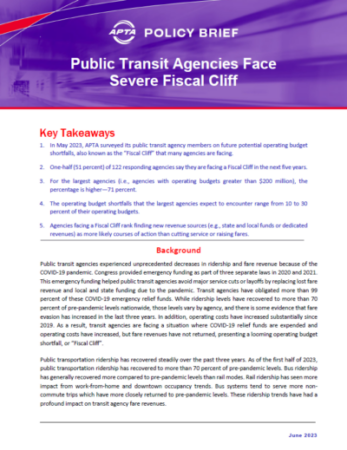
Transit Workforce Shortage: Phase 2 Report and Agency Toolkit
Public transit providers across North America face a shortage of operators and mechanics, a crisis that has strained budgets and forced agencies to reduce service. APTA’s Transit Workforce Shortage Study combines information from a survey of public transit workers and interviews with public transportation agencies to provide insight into ways to address the national shortage of transit workers. The report provides information on actions agencies have taken to address the workforce shortage, and the toolkit provides step-by-step answers to workforce shortage scenarios agencies are facing every day.
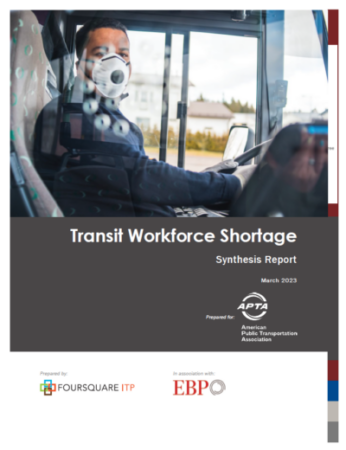
Transit Workforce Shortage: Root Causes, Potential Solutions, and the Road Ahead
Public transit providers across North America face a shortage of operators and mechanics, a crisis that has strained budgets and forced agencies to reduce service. This shortage is occurring during a period of economic instability and reshuffling exacerbated by the COVID-19 pandemic. Agencies’ ability to respond to the worker shortage has been hampered by inadequate information about its causes and effects. The Transit Workforce Shortage Study builds a framework for APTA, its members, and its partner organizations to better understand the workforce shortage’s causes and provides best practices for recruiting, hiring, and retaining transit operations workers.
Workforce Shortages Impacting Public Transportation Recovery
The COVID-19 pandemic has impacted public transportation’s workforce, creating shortages at many positions across the industry. While the workforce shortage issue has been on the industry’s radar for some time, it has been pushed to new levels in the pandemic recovery period. Ninety-two percent of public transportation agencies indicated that they are having difficulty hiring new employees, and 66 percent are having difficulty retaining employees. Nearly three-in-four transit agencies said that they have either had to cut service or delay service increases because of worker shortage issues.
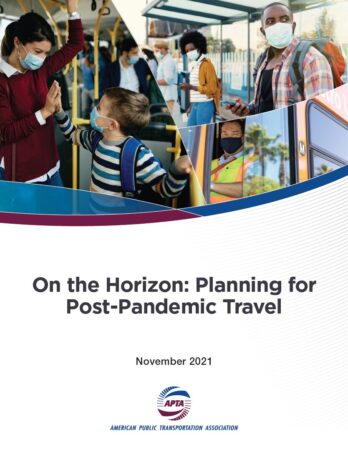
On the Horizon: Planning for Post-Pandemic Travel
Transit agencies played an essential role in ensuring the mobility of millions of Americans during the COVID-19 pandemic especially essential workers who kept society going even at the height of the health crisis. As the industry and nation begin to look to the future, we examine how demographic, employment, and travel trends may change in the coming decades. Based on the data, four overarching recommendations were developed for agencies that included integrating best practices from the COVID-19 period, prioritizing social equity, leveraging opportunities to expand ridership, and keeping abreast of changing trends.
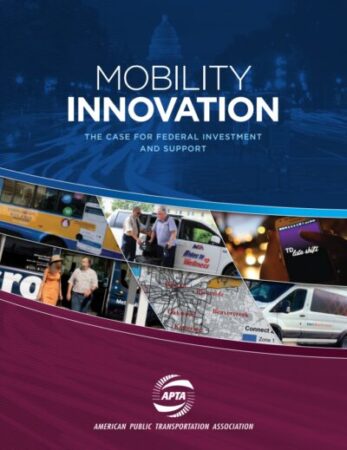
Mobility Innovation: The Case for Federal Investment and Support
The pace of innovation in the public transportation industry has accelerated over the past five years. The six case studies in this report illustrate the true innovative potential of the public transit industry in the United States today. These programs focus on serving sectors of the market most in need of help: people living in areas that are currently underserved by transit, those who require wheelchair access, and those who commute during off-peak late-night hours. These programs epitomize how transportation services can be used to foster more equitable and inclusive communities.
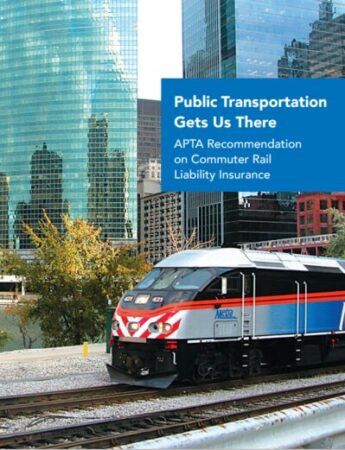
APTA Recommendation on Commuter Rail Liability Insurance
Due to current market conditions that have reduced competitiveness and raised prices in their insurance market, Commuter Rail Agencies have struggled, and will continue to struggle, to fill their substantial liability insurance requirements. There is a clear federal interest in maintaining and expanding effective commuter rail operations in the United States. APTA recommends establishing a Commuter Rail Insurance Program at the U.S. Department of Transportation to provide insurance to commuter rail agencies that operate commuter rail services in the United States.
Medicaid Transportation Benefits: Changes Negatively Impact Recipients
Non-Emergency Medical Transportation (NEMT) is a Medicaid benefit that provides critical access to health-care appointments for Medicaid recipients with no other means of transportation. Federal and state Medicaid policy changes have negatively impacted NEMT users, including reducing NEMT efficiency, availability, and quality of service, while increasing the local tax burden or trip costs in some communities. APTA opposes any effort to eliminate NEMT. We support legislation that a) mandates NEMT as a benefit in the Medicaid statute; and b) prohibits funding to implement proposals making NEMT for Medicaid recipients optional for states.
The Real Estate Mantra – Locate Near Public Transportation
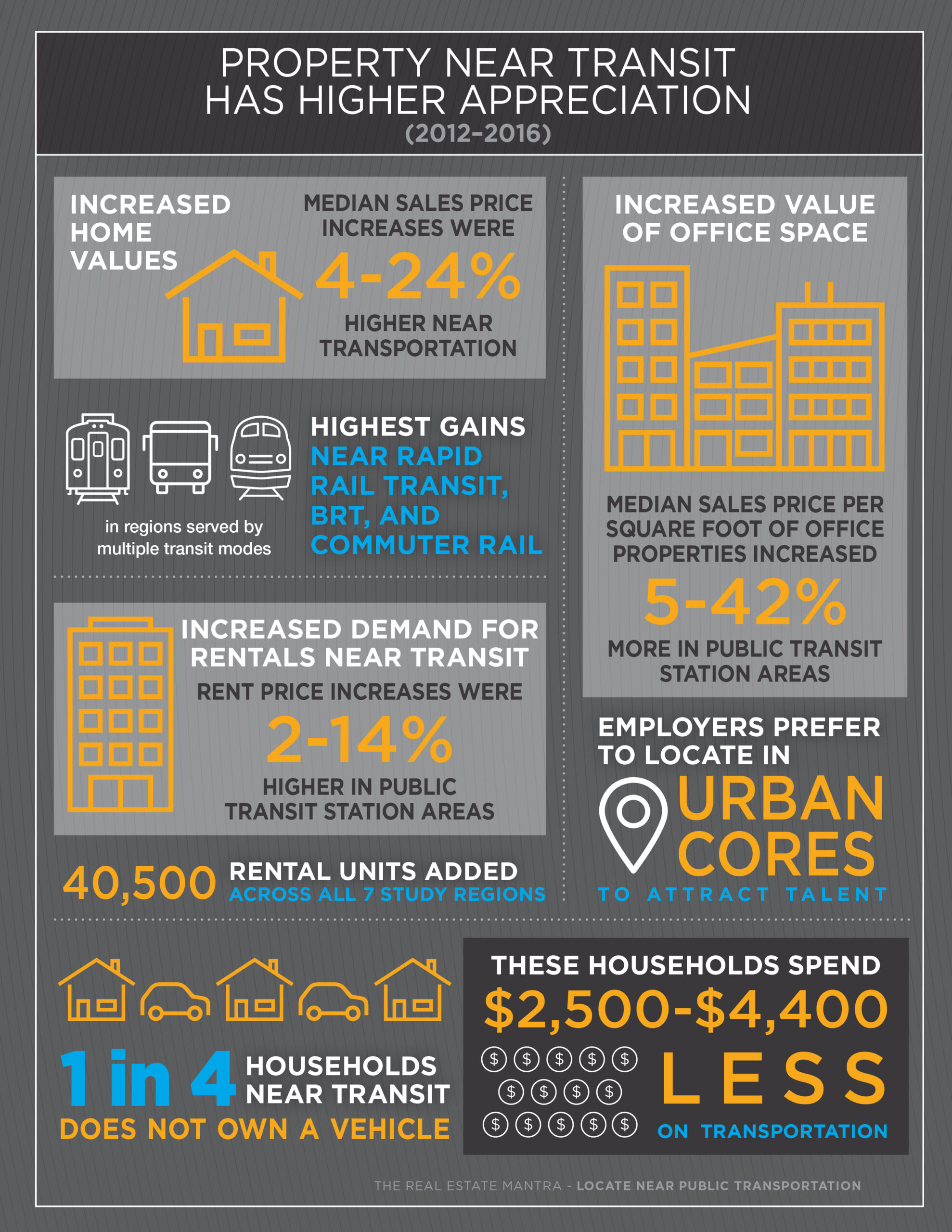
Since the Great Recession, many areas of the country are experiencing increased property values, especially near fixed-guideway public transit (rail and bus rapid transit). Easy access to destinations and activities is an important factor in home-buying decisions. At the same time, businesses are recognizing the benefits of locating near public transit to attract employees and customers, and to save on parking costs. The results of this analysis show that neighborhoods located within a half mile of public transit services outperformed those in areas farther from public transit based on a number of factors.
Supporting Late-Shift Workers: Their Transportation Needs and the Economy
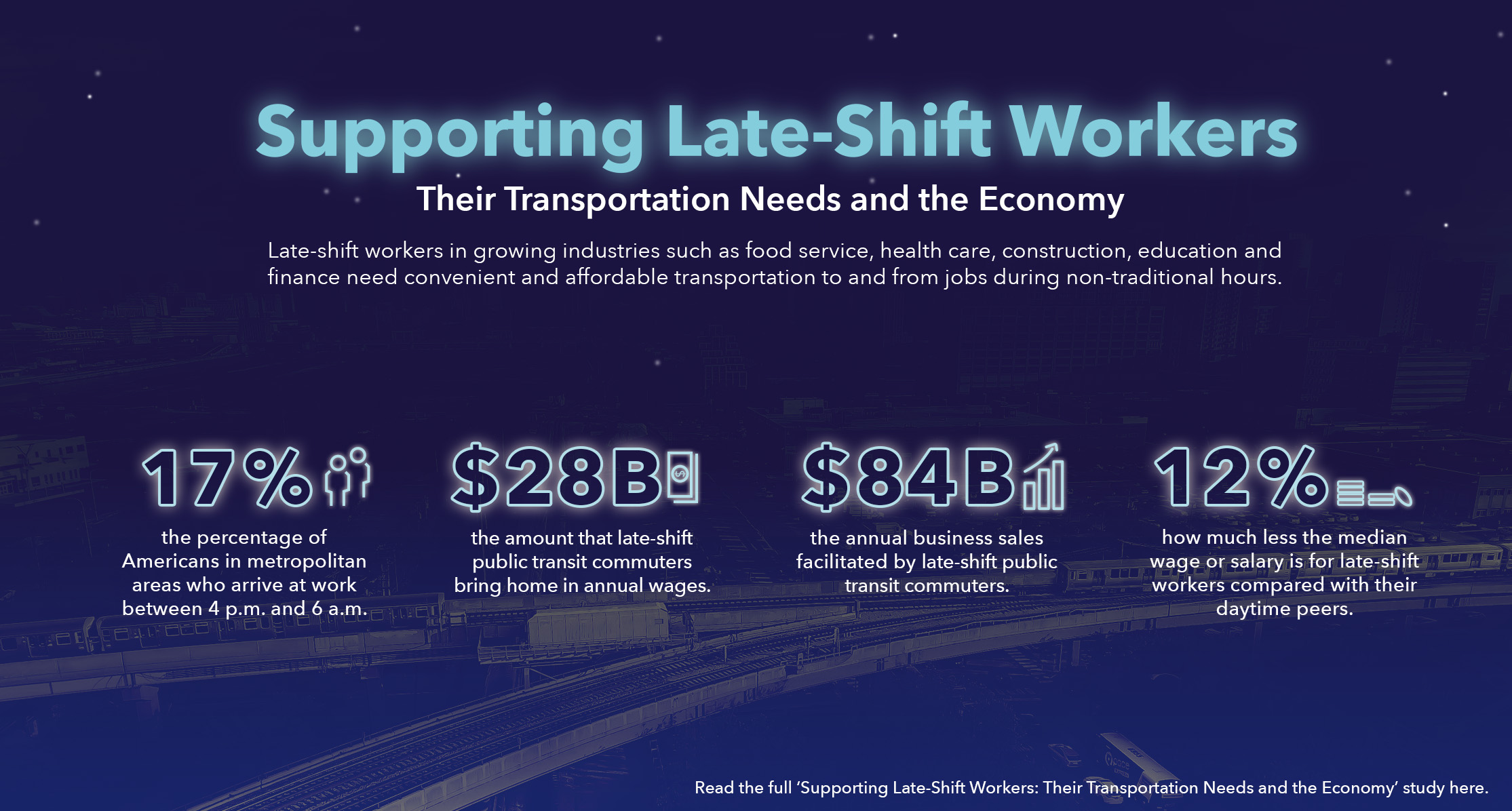
Many public transit agencies around the country operate late shift services but additional services are vitally needed. Late-shift commuters represent a small percentage of the late-night workforce but generate an estimated $28 billion in wages and $84 billion in sales each year. Inadequate access to public transit services can prevent segments of the workforce from accessing better late-shift job opportunities while also increasing turnover and absenteeism rates for employers.
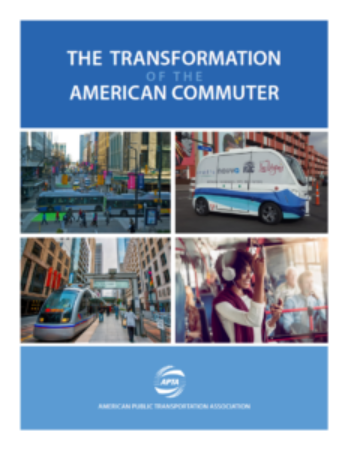
The Transformation of the American Commuter
The American commuter is no longer required to settle for private automobiles as their main way of getting around. More than three in four Americans (77%) see public transit as the backbone of a multi-transit lifestyle that includes current and future technologies such as ride-hailing (e.g. companies like Uber and Lyft), bikesharing, carsharing, autonomous vehicles (AVs) and other emerging technologies, according our new study.
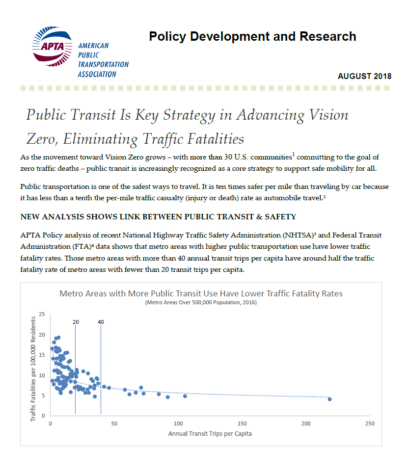
Public Transit Is Key Strategy in Advancing Vision Zero, Eliminating Traffic Fatalities
As the movement toward Vision Zero grows, public transit is increasingly recognized as a core strategy to support safe mobility for all. Public transportation is one of the safest ways to travel. It is ten times safer per mile than traveling by car because it has less than a tenth the per-mile traffic casualty (injury or death) rate as automobile travel.
The Benefits of Reliable Federal Funding for Public Transportation
There is a bipartisan consensus that the United States is falling behind its global competitors on the condition of our infrastructure. Policies addressing the current lack of investment would have the potential to generate economic growth and enhance productivity. Guaranteed annual funding provides benefits that nonguaranteed funds do not, from spurring innovation and job creation to getting more “bang” for the federal buck. This paper examines guaranteed transit funding specifically and concludes that this type of infrastructure spending provides numerous benefits.
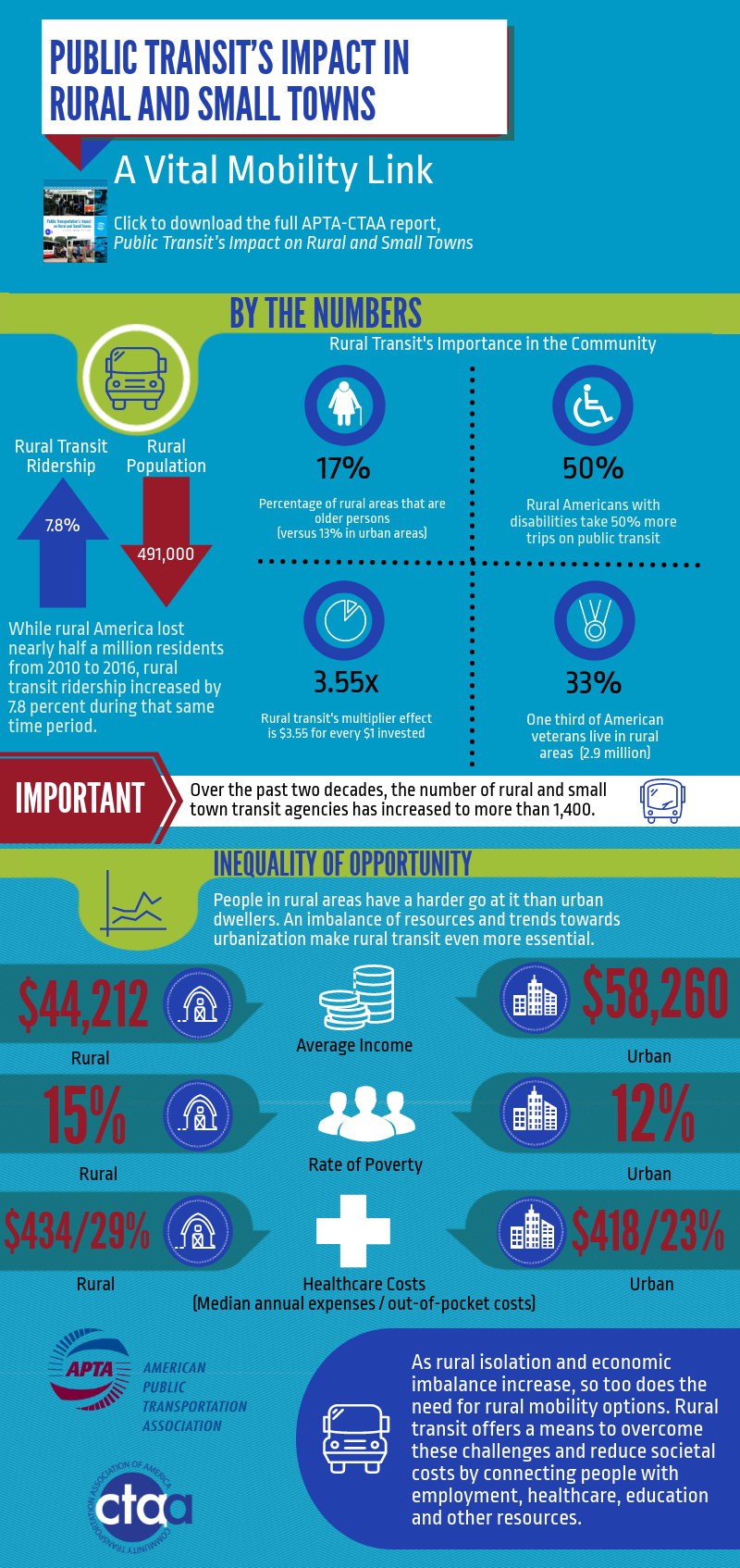
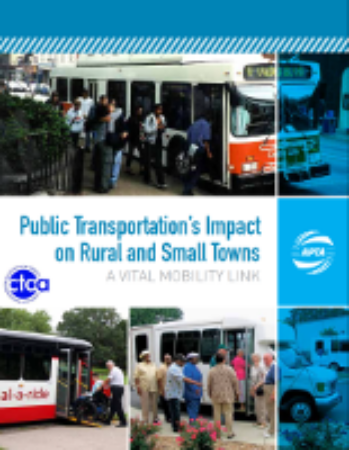
Public Transportation’s Impact on Rural and Small Towns
While it is sometimes assumed that public transportation is only essential for large urban areas with significant traffic congestion, this report shows that public transportation can also play an important role in rural areas and small towns. Although public transit serves a minor portion of total rural travel, the trips that are provided are particularly valuable.
Evaluating Value Capture Financing Options for Public Transportation
This summary of TCRP Research Report 190 describes and provides examples of several value capture arrangements being used by cities and transit agencies.
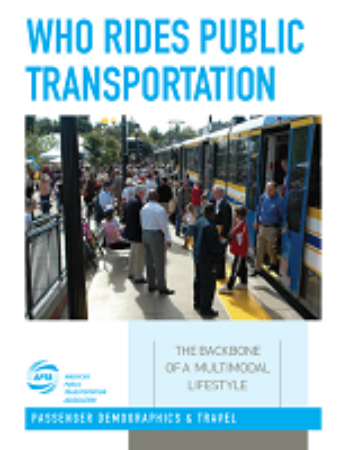
Who Rides Public Transportation
Public transit riders are part of the engine that powers America’s economy, with 87% of public transit trips directly impacting the economy through connecting people to employers needing workers and to retail and entertainment venues. Seventy-one percent of public transportation riders across the country are employed, and another 7% are students. This study, authored by the CJI Research Corporation, is the most extensive demographic report of public transit riders ever, with nearly 700,000 passenger surveys.
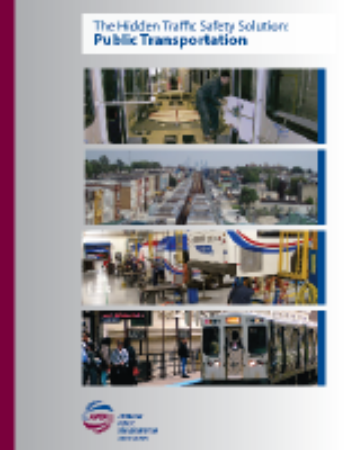
The Hidden Traffic Safety Solution: Public Transportation
The most effective life-saving traffic safety tool for a commuter and a community may be the daily metro transit pass. A person can reduce his or her chance of being in an accident by more than 90 percent simply by taking public transit as opposed to commuting by car. This means traveling by public transportation is ten times safer per mile than traveling by auto. Transit-oriented communities are five times safer than automobile-oriented communities. This means public transit cuts a community’s crash risk in half even for those who do not use public transit. Public transportation communities spur compact development which reduces auto miles traveled and produces safer speeds.
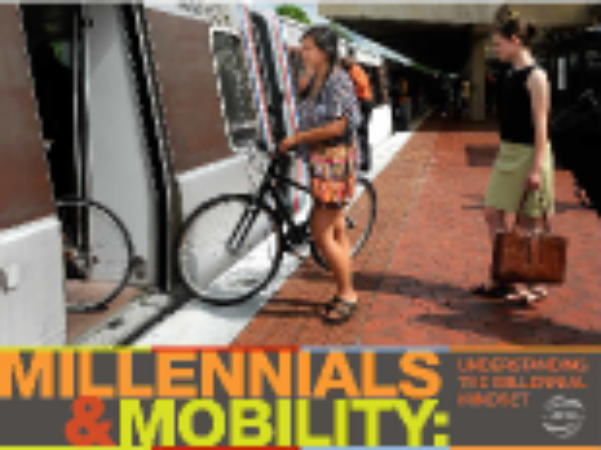
Millennials & Mobility: Understanding the Millennial Mindset
This report seeks to understand the mindsets behind the decline in driving among millennials and understand the implications of this and other trends for public transportation in the United States, utilizing a mixture of in-depth interviews and a survey of 1,000 people in six cities that are representative of the types of cities Millennials find attractive.