



Hall of Fame
HALL OF FAME
APTA’s Hall of Fame honors the individuals whose vision, leadership, and dedication have made a lasting impact on the public transportation industry. Celebrating pioneers, innovators, and champions of transit, the Hall of Fame recognizes careers marked by excellence, service, and meaningful contributions that have advanced mobility and strengthened communities. These honorees reflect the values and progress of the industry and serve as enduring inspirations for current and future generations of public transportation professionals.
Hall of Fame
Feysan Lodde
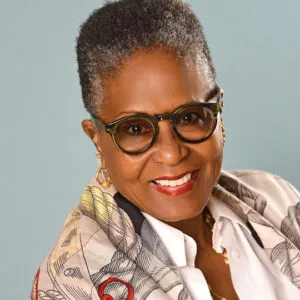
Feysan Lodde is a pioneer whose impact on the public transit industry is both historic and transformative. Nearly 50 years ago, she co-founded MV Transportation with a single paratransit van and a bold vision: to provide safe, dignified mobility for seniors and individuals with disabilities—at a time when such access was neither common nor required by law.
Today, her work has touched millions, helped shape national standards for accessible transportation, and created career opportunities for hundreds of thousands of employees.
Feysan’s leadership was never limited to the boardroom. She worked every job at MV—from driving and dispatching to managing operations— gaining firsthand insight into the challenges of frontline workers and the needs of vulnerable riders. Her hands-on, servant-leader approach laid the foundation for MV’s people-first culture and performance-driven growth. Under her stewardship as Chief Administrative Officer, MV became the largest privately owned passenger transportation company in North America, providing more than 100 million trips annually.
What truly distinguishes Feysan is her unwavering commitment to equity and inclusion. Her founding vision predated the Americans with Disabilities Act by 15 years, and she proved that the private sector could not only meet public need but set a higher standard for access, dignity, and service. She infused those same values into the company’s culture, championing workforce development, creating career paths for underrepresented groups, and investing in community partnerships that extended MV’s impact far beyond mobility.
Feysan’s commitment to advancing public transportation did not stop at MV. She has been a dedicated supporter of the American Public Transportation Association (APTA) for more than two decades. Under her leadership, MV has actively participated in APTA’s conferences, committees, technical panels, and white papers—contributing thought leadership on ADA compliance, paratransit innovation, and public-private contracting. MV has also invested more than $500,000 in support of APTA initiatives, reflecting Feysan’s belief in industry collaboration and collective progress.
She prioritized sending emerging leaders from MV to APTA events, helping grow the next generation of transit professionals and positioning MV staff in key APTA roles, including Leadership APTA graduates and committee leaders. Her strategic foresight ensured MV’s legacy of service would continue through strong, diverse leadership.
Feysan has been recognized nationally for her leadership and advocacy, receiving awards from the Conference of Minority Transportation Officials, Black Enterprise, Greater Orlando Aviation Authority, and many others. But her most enduring legacy is the standard she set; that transit can and must be inclusive, innovative, and purpose-driven.
Through vision, humility, and relentless service, Feysan Lodde has not only built a company, but helped shape the modern ethos of American public transportation. Her induction into the APTA Hall of Fame would not only honor a remarkable legacy, it would remind the industry of what is possible when leadership is rooted in compassion and driven by purpose.

Jeanne Krieg
For more than three decades, Jeanne Krieg has exemplified the highest ideals of leadership, integrity, and innovation in public transportation. As the longtime CEO of the Eastern Contra Costa Transit Authority, more commonly known as Tri Delta Transit, Jeanne transformed a small suburban agency into a nationally recognized leader in sustainable operations, impartial workforce development, and customer-focused service. Her lasting impact on both her community and the industry at large makes her a deeply deserving recipient of the 2025 APTA Hall of Fame Award.
Jeanne began her public transportation journey in 1991 in Tri Delta Transit’s marketing department, where her creative campaigns earned numerous APTA AdWheel Awards. Just four years later, she was named the agency’s third General Manager—and ultimately its CEO—a role she held until her retirement in 2023. Under her stewardship, Tri Delta Transit grew from a modest three-route operation with 13 buses into a robust regional system with 106 buses, 17 lines, and four distinct services.
Jeanne’s vision extended far beyond operational growth. She led Tri Delta Transit to become an early adopter of alternative fuels, real-time passenger information systems, and zero-emission technologies. Her agency was one of the first of its size to embrace sustainability, earning multiple local and state awards including the Leadership in Sustainability Hall of Fame This special honor is reserved for individuals whose careers and contributions to public transportation and to APTA have been significant, substantial and distinguished. Induction to the APTA Hall of Fame is a prestigious honor that recognizes outstanding achievements and a lasting legacy within the industry. and Environmental Partnership Awards. She also championed accessibility and fairness, evidenced by the Ilene Lubkin Senior Transportation Provider Award for Contra Costa County and her persistent efforts to build a workforce culture rooted in accountability and advancement.
Jeanne graduated in 1998 from Leadership APTA and is the first in its history to be inducted into the Hall of Fame. She has been a powerhouse within APTA governance—serving on the Board of Directors, Executive Committee, CEO Coordinating Council, Strategic Engagement Council, Legislative Committee, and more. Her national leadership also includes extensive work with the Transportation Cooperative Research Program (TCRP), where she served as Chair of the TOPS Committee. She has long been a tireless advocate for small and mid-sized agencies, helping shape policy frameworks and creating collaborative spaces for peer learning through the Small Operations Committee.
Beyond her titles and accolades, Jeanne is known as a generous mentor, a passionate advocate, and a trusted connector. She has shared her expertise with institutions like the Greater Plains Transportation Institute and CALACT, while being an enthusiastic champion for tools and technologies that enhance community service. Her legacy includes a peer review system for small operators, workforce development pipelines, and a culture of care that earned Tri Delta Transit one of the lowest turnover rates in the industry.
From her 2024 WTS Katherine G. Johnson Trailblazer Award, the 2021 California Transit Association Small Operator of the Year, and the 2014 APTA Outstanding Transportation System Award, Jeanne’s career is marked by visionary leadership and tangible outcomes. But what truly sets her apart is how she led, with humility, collaboration, and a commitment to public good.
For her transformative service, unwavering dedication to fairness, and enduring contributions to the industry, Jeanne Krieg is not only eligible but eminently worthy of being inducted into the APTA Hall of Fame.
Mark Donaghy
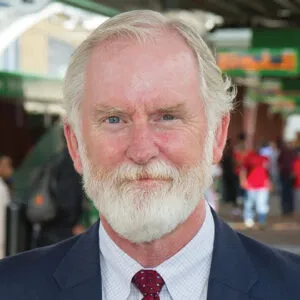
Mark Donaghy’s remarkable 45-year career in public transportation is a masterclass in courage, integrity, and transformative leadership. A second-generation transit professional and the son of APTA Hall of Fame inductee James W. Donaghy, Mark has not only honored his family legacy but has also forged his own through groundbreaking achievements; unwavering advocacy; and an unmatched commitment to equity, community, and operational excellence.
Mark’s journey began humbly in 1976 as a driver and mechanic during Omaha’s school desegregation. That early act of stepping forward when others stepped back foreshadowed a lifetime of service marked by moral clarity and principled action. Throughout his decades in roles across Nebraska, Minnesota, Kentucky, New Hampshire, Montana, and Ohio, Mark’s focus remained consistent: protect the vulnerable, build opportunity, and raise the standard for all.
His most historic achievement came as CEO of the Greater Dayton Regional Transit Authority (RTA), where he successfully challenged the City of Beavercreek’s refusal to allow public transit—securing the first-ever Federal Highway Administration civil rights ruling against a city for discrimination in transit access. Mark did not just oversee this Hall of Fame This special honor is reserved for individuals whose careers and contributions to public transportation and to APTA have been significant, substantial and distinguished. Induction to the APTA Hall of Fame is a prestigious honor that recognizes outstanding achievements and a lasting legacy within the industry. victory—he drove the first bus across the threshold of justice. This pivotal moment, captured in Ohio State University’s documentary Free to Ride, stands as a landmark in transportation civil rights history and earned him a lifetime NAACP achievement award.
Mark’s leadership legacy spans policy, operations, and human impact. From launching ADA-accessible programs and championing women and minorities in the workplace, to lobbying with The Bus Coalition and co-founding the American Bus Benchmarking Group, he has left an enduring footprint on both service quality and funding equity nationwide. His leadership helped shape TEA-21 and laid groundwork for reauthorization frameworks like MAP-21 and the FAST Act, ensuring transit systems of all sizes had a seat at the table.
Through APTA, Mark served with distinction on the Board of Directors, Legislative Committee, Bus and Paratransit CEOs Committee, CEO Coordinating Council, and several task forces, offering selfless service even to the point of volunteering to eliminate his own board seat for greater organizational reform. He championed minorities and women through award-winning agency practices and steered his teams through some of Dayton’s darkest hours with poise, compassion, and unity. Under his guidance, RTA became a symbol of strength during natural disasters, civil unrest, and tragedy—offering not just mobility, but hope.
A recipient of countless national and state honors, including APTA’s award for Advancement of Minorities and Women in the Workplace in 1997 and Spirit of the ADA Awards in Kentucky and Ohio, Mark’s impact is measured not just in programs and policies, but in the people he empowered. He is remembered as a CEO who rode the buses, worked the floors, and never asked for more than he gave. He has been, and remains, the embodiment of APTA’s core values: leadership, fairness, professionalism, excellence, and accountability.
For a lifetime of fearless advocacy, barrier-breaking service, and transformational leadership, Mark Donaghy stands as a profound and deserving candidate for the 2025 APTA Hall of Fame Award.
Frank DiGiacomo
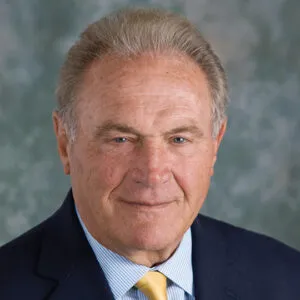
Frank DiGiacomo’s enduring legacy in the public transportation industry is marked not only by his professional achievements but by the character, commitment, and quiet leadership he brought to every endeavor. Over decades of dedicated service, Frank left an indelible imprint on the American Public Transportation Association (APTA) and the broader transit community through his visionary work, principled leadership, and deep commitment to mentoring the next generation.
A long-serving and respected member of the Business Member Board of Governors (BMBG), Frank’s contributions to APTA were far-reaching and foundational. He was not simply an active participant—he was a builder of institutions and ideas. As Chair of the BMBG Bylaws Committee, Frank safeguarded the group’s historical record and ensured its governance remained robust and relevant. But perhaps his most visible legacy is Business in Motion, the BMBG newsletter he founded and published, which became an essential voice for business members and a model of clear, inclusive, and impactful communication within the industry.
Frank also played a central role in shaping industry conversations. He led key roundtable events, championed APTA’s strategic planning goals, supported industry-wide funding efforts, and was a regular presence at APTA Board of Directors meetings. Yet his most significant contributions were behind the scenes—as a mentor, guide, and champion for countless professionals across both public agencies and private suppliers.
A tireless advocate for the American Public Transportation Foundation (APTF), Frank not only contributed on behalf of his organization but gave personally, reflecting his deep belief in the power of education and opportunity. His generosity extended far beyond financial contributions—he gave his time, wisdom, and encouragement freely, shaping the careers of many and strengthening the fabric of the industry.
Frank’s commitment to APTA’s core values is both exemplary and enduring. His leadership shone through in his editorial work and committee service; his integrity defined his journalistic standards and personal conduct. He modeled excellence in every interaction and demanded the same in his work. Through his editorial team, which he supported selflessly, Frank embodied fairness, teamwork, and professionalism. His approach to accountability was unwavering—ensuring balanced, thorough, and accurate reporting on the complex issues facing the industry.
Recognized for his distinguished service, Frank was named APTA’s Outstanding Business Member in 2002 and later was honored by the National Association for Pupil Transportation with its Distinguished Service Award (2014) and Hall of Fame induction (2016). These accolades affirm what his colleagues had long known: Frank DiGiacomo was one of the most respected and influential figures in transportation media and governance.
For his visionary leadership, unwavering integrity, and immeasurable impact on the people and principles that define public transportation, Frank DiGiacomo merits this honor of receiving the 2025 APTA Hall of Fame Award.
Peter Varga
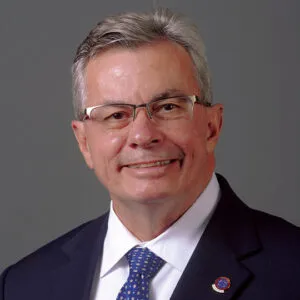
Peter Varga’s remarkable 48-year career in public transportation exemplifies the absolute best of APTA’s values: visionary leadership, unwavering integrity, and a lifelong commitment to public service. From his early days as a bus driver to his transformative 25-year tenure as CEO of the Interurban Transit Partnership (The Rapid) in Grand Rapids, MI, Peter has redefined what it means to lead with purpose, humility, and results.
Peter is more than a transit executive, he is a builder, a connector, and a national voice for mobility and equity. Under his leadership, The Rapid twice received APTA’s Outstanding Public Transportation System Award (2004 and 2013). He spearheaded major advancements in sustainability, innovation, and infrastructure, including the development of Michigan’s first BRT service, the Silver Line, and the first LEED-certified transit building in the United States, Rapid Central Station. His strategic vision also led to the construction of the Laker Line BRT and the conversion of onethird of the fleet to compressed natural gas.
What makes Peter’s legacy unique is his steadfast belief that transit must be community-driven. He championed five successful transit millages, linking service expansion to regional job growth, and ensuring that The Rapid became an engine for economic opportunity. His leadership extended beyond system operations—he empowered his staff, encouraged professional development, and promoted a culture of fairness, teamwork, and accountability. Many of his team members have gone on to greater positions, a testament to Peter’s mentorship and people-first approach.
Peter’s leadership also shaped APTA at the highest level. As Chair from 2013–2014, he energized the industry with his call to “Energize, Organize, Authorize”—a rallying cry for transportation reauthorization that continues to resonate. More than three decades of service to APTA includes roles on the Board of Directors, Executive Committee, and leadership of numerous influential committees, including Small Operations, Legislative, Access, and Sustainability. He also played a vital role in mentoring through the American Public Transportation Foundation.
Even in retirement, Peter’s influence remains strong. As a consultant and advisor to transportation agencies and firms nationwide, he continues to guide emerging leaders and shape new transit systems, including efforts underway in Battle Creek, Michigan.
Peter Varga does not seek accolades—he seeks impact. He has proven repeatedly that one can achieve extraordinary things when driven by service rather than self. He has helped build cleaner fleets, smarter systems, stronger communities, and a more connected industry.
For his lifetime of service, innovation, and principled leadership, Peter Varga is a truly deserving recipient of the 2025 APTA Hall of Fame Award. His legacy is not only measured by the systems he helped build—but by the people he has inspired, mentored, and empowered to carry public transportation forward.
William R . Mooney III
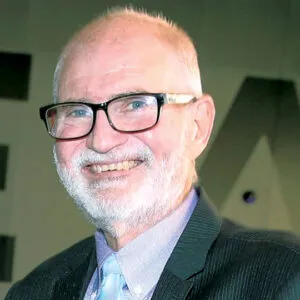
Few individuals have shaped the public transportation industry with the lasting impact, quiet strength, and visionary leadership of William R. Mooney III. Over a remarkable 48-year career, Bill rose from a Police/Security Officer at the Chicago Transit Authority (CTA) to become its Chief Operating Officer—the pinnacle of leadership at one of the largest transit systems in the United States. But it was not only the roles he held that distinguished Bill; it was how he used those roles to transform systems, uplift others, and serve the mission of public transportation with integrity, humility, and excellence.
At CTA, Bill’s leadership was responsible for some of the agency’s most ambitious capital projects, including airport-serving rail lines, the expansion and modernization of the Brown Line to meet ADA requirements, and the procurement and rehabilitation of more than 1,700 railcars. Under his stewardship, CTA experienced record ridership gains and posted its safest operational performance in history—reducing accident rates by 30 percent for rail service and 20 percent for bus.
Following his retirement from CTA in 2010, Bill transitioned to the private sector, where he continued to elevate the industry. From Halcrow to H.W. Lochner and later through his own firm, WRM & Associates, Bill lent his expertise to projects across the U.S. and abroad—developing asset management programs, advising on billion-dollar procurements, and shaping open-payment fare systems. Whether in Boston, New York, Riyadh, or Singapore, Bill’s insights drove innovation and reliability.
Yet, what truly set Bill apart is not only what he accomplished, but how he did it. Bill was the embodiment of servant leadership. He mentored and inspired hundreds of professionals, many of whom now serve in senior roles across the industry. He championed and empowered women and people of color, and ensured underserved communities had better access to transit.
Bill’s contributions to APTA were equally profound. A constant presence at conferences, committees, and peer reviews, he chaired the Rail Standards Policy & Planning Committee for 12 years and served on more than a dozen other committees—lending his time and wisdom generously. He played pivotal roles in peer reviews from New York to Hong Kong, offering guidance during critical moments, including NYC Transit’s post-9/11 response.
Throughout his life, Bill avoided the spotlight. He deferred praise, elevated others, and let his work speak volumes. He lived APTA’s values: integrity, respect, excellence, and collaboration. His legacy is etched not only in safer, more reliable systems, but in the lives he changed, the leaders he mentored, and the industry he helped shape.
Inducting Bill Mooney into the APTA Hall of Fame posthumously is only fitting. APTA honors a man who never sought honors for himself, but who gave everything to ensure the industry could move forward with purpose, people, and pride.

Michael Schneider
Michael Schneider has enjoyed a 50-year career in public transportation, comprising executive leadership, program and project management, technical innovation, and thought leadership. His career has combined management and leadership roles at several of the industry’s most prominent engineering and management firms, managing many of the world’s most significant transportation and infrastructure megaprojects.
Schneider is co-founder and managing partner of InfraStrategies LLC, a global consultancy providing strategic advisory services, program management, and project advocacy services to public authorities and private organizations. Prior to forming InfraStrategies, he was senior vice president of HDR Inc., where he established and directed the firm’s global strategic consulting practice and served as the firm’s director of professional services. Earlier, he co-founded and served as chairman and CEO of InfraConsult LLC, a firm specializing in project development, program management, and public-private partnerships. He was with Parsons Brinckerhoff (now WSP) for more than 30 years, where he led the transportation business group, founded and chaired the strategic advisory practice, and served on the firm’s board of directors for many years.
Schneider has been a member of the APTA Board of Directors and was founding chair of APTA’s Public-Private Partnerships Committee. He Hall of Fame This special honor is reserved for individuals whose careers and contributions to public transportation and to APTA have been significant, substantial and distinguished. Induction to the APTA Hall of Fame is a prestigious honor that recognizes outstanding achievements and a lasting legacy within the industry. has been an active participant and leader in numerous professional organizations, including serving as the first man elected to the International Board of Directors of the Women’s Transportation Seminar (WTS).
He has worked in more than 20 countries, and on major public transportation programs in India, Mexico, Panama, and Israel. He led numerous projects focused on improving access and public transportation within the U.S. National Park System and served as project director for the landmark National Recreation Access. He led master planning work for Yosemite and Yellowstone national parks and provided transportation consultation for the Lake Placid and Salt Lake City Winter Olympics.
Schneider is a frequent speaker at industry meetings and international conferences and has been a guest lecturer at several prominent universities. He has authored more than 150 papers and juried publications in the fields of infrastructure finance, project delivery, and management practices, and has provided background papers and supplied testimony on policy development to various congressional committees and the White House.

Hugh A. Mose
ugh Mose began his nearly 50-year transit career when, in graduate school at the University of Maryland, he was introduced to the managers of several small public transit systems. Hired out of graduate school to manage the city-run transit system in Iowa City, IA, he knew in three weeks that transit management would be his career
After five years at Iowa City Transit, he moved to Fresno, CA, where he served as assistant transit director, and then to Olympia, WA, where for eight years he managed Intercity Transit. Returning to the East Coast in 1995, he found his true home at the Centre Area Transportation Authority (CATA) in State College, PA, where he worked as general manager until his retirement in 2014.
Mose has continued his industry involvement, undertaking consulting work and devoting time and energy not only to APTA, but to the American Public Transportation Foundation, the Transit Cooperative Research Program, the National Transit Institute, and other organizations.
From the outset, Mose has been committed to public transportation in every manner as an industry leader. From his earliest involvement with APTA he has been fully engaged—representing small transit systems, advocating for transit funding, supporting membership development, and serving for more than a decade on the APTF Board of Directors.
At Intercity Transit, Mose brought ADA paratransit in-house and then blended buses and vans into one comprehensive operation. Later, he led CATA to become the first transit system on the East Coast to have a 100 percent natural gas-powered bus fleet.
Examples of his role as innovator include implementing a 1990s version of first-mile, last-mile service, promoting one of the nation’s most transit-supportive site plan review processes, and developing a unique apartment-based bus pass program that brought riders by the thousands.
His early work in Olympia led to Intercity Transit taking over and expanding the Dash shuttle, a free service that runs in downtown Olympia during the legislative session, and later, in State College, his work with the staff at Penn State resulted in CATA being invited to operate the campus bus service.
Mose was fostering diversity and inclusion long before those terms were in common use; and he continues to mentor APTF scholars and other young professionals.
As a transit manager, Mose worked tirelessly to respond to the needs of riders and other transit stakeholders, the public and the elected officials who represented them, and the employees who were making a career of public transportation.
Being the “face” of his transit agency has also led Mose to be a leader in his community. He has served as United Way board chair, Rotary Club president, chair of the State College Transportation Commission, and clerk of the board at a Quaker-directed retirement community.

Carolyn Flowers
Carolyn Flowers grew up in Los Angeles, where she relied on public transit to get to school. Later, when embarking on an MBA, she envisioned a career in the finance department of a large corporation. But then, after a few years in the private sector, she transitioned to the public transit sector and has never looked back.
Flowers received recognition from the UCLA Anderson School of Business 75th Anniversary celebration for her public career service. She was chosen as one of the 100 most Inspirational Alumni for her inspired leadership in public transit. She was also recognized by the UCLA Black Alumni Association as the Tom Bradley Alumnus of the Year (an award named for the first black mayor of Los Angeles, who championed public transportation expansion in the city) for making valuable contributions to the Los Angeles community in her role as chief operation officer at the Los Angeles County Metropolitan Transportation Authority (LA Metro), where she would serve in leadership roles in finance and operations for more than 19 years.
From 2010 to 2015, Flowers served as the first woman CEO/director of public transit for Charlotte Area Transit System (CATS), NC. She was a presidential appointee in the Obama Administration at FTA, serving as senior advisor and acting administrator. She then worked at AECOM, leading business development and strategy for public transit in the U.S. and Canada. In February 2019, she joined InfraStrategies LLC as a partner, providing strategic advice and consulting services.
Flowers currently serves on several boards: MPact, Transit Cooperative Research Program, Oversight and Project Selection, and Eno Center for Transportation. She was previously a member of the APTA Board of Directors and the Women’s Transportation Seminar International board. She also served on the board of APTA’s North American Transit Services Association. She currently serves on two corporate boards: Mobico (formerly National Express) and Neology Corp. She also previously served on the boards of MV Transportation, Cubic Corporation, and Circlepoint.
In 2008, Flowers was named Woman of the Year by the Los Angeles Chapter of the Women’s Transportation Seminar. She also received the Ambassador Award for her volunteer work with the American Stroke Association and received a special recognition for public service from the Greater Los Angeles African American Chamber of Commerce and was a recipient of the National Women’s History Month award from the Black Business Association of Los Angeles. In addition, she was honored by the Eno Center for Transportation in 2018 with its Friends of Eno Award.
Flowers is a graduate of Leadership APTA and the Eno Executive Leadership program.
John P. Bartosiewicz
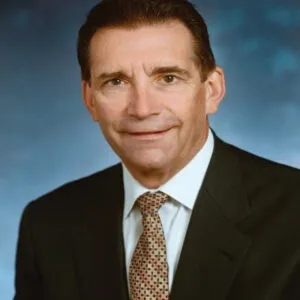
John Bartosiewicz’s distinguished career in the field of transit is a tribute to his father’s beginnings as a bus mechanic in Queens, New York during the 1950s. John’s career in the transit industry commenced while at Assumption College in Worcester, Massachusetts, where he not only initiated but also managed and operated the inter-campus shuttle service. This experience paved the way for a series of bus operator roles throughout his graduate studies.
His formal foray into the realm of transit management began as the Administrative Assistant to the Transit Director in Chapel Hill, North Carolina. Bartosiewicz eventually assumed the role of Interim Director. However, his enduring legacy was forged when he joined McDonald Transit Associates in Fort Worth, Texas, where his career spanned more than four decades. In 2016, McDonald Transit merged with RATP Dev where Bartosiewicz finished his career as the Chief Operating Officer.
During his tenure as CEO, he transformed the T in Fort Worth. He elevated a small, bus-exclusive transit system into a multi-modal regional operation, complete with commuter rail and a sustainable funding source. His leadership was characterized by innovation, including early adoption of computerized scheduling, employing part-time operators, and introducing Compressed Natural Gas as a pioneering bus fuel source. He championed initiatives such as Guaranteed Ride Home for commuter service users, Fixed Route Travel Training for ADA-eligible paratransit riders, and pre-Uber and Lyft era, on-demand cell phone-based service for the general public. Furthermore, he orchestrated the transition of low-density bus routes into vanpool services, collaborated with social service agencies to offer free bus transportation to clients and promoted extensive utilization of taxicab services to enhance paratransit options.
Bartosiewicz’s corporate contributions encompassed the management of multiple transit systems and the negotiation of numerous labor agreements. These agreements improved the quality of life for employees and ushered in state-of-the-art benefits and incentives. His most cherished accomplishments were unwavering support for his team and mentorship of numerous transit managers. He acknowledged, “My induction into the APTA Hall of Fame was a true team effort, made possible by the thousands of people, both professional and in my family, who supported my career.”
His commitment to the transit industry and its advancement was boundless. His role as a founding member and chair of state and regional transit associations reflected his dedication to the sector’s progress. He also contributed significantly to the industry’s development by serving on the Transportation Research Board TOPS Committee and participating in various expert panels. His invaluable contributions to APTA included co-leading the organization’s first strategic plan, serving on the inaugural Standards Development Council, and leading APTA’s first ever international study mission. His leadership roles within APTA culminated when he served as its 2000 Millennial Chair. Bartosiewicz’s career earned him multiple accolades, including APTA’s Diversity and Inclusion Award and Outstanding Public Transit Manager, Friend of Texas Transit and WTS Employer of the Year.
Phillip A. Washington
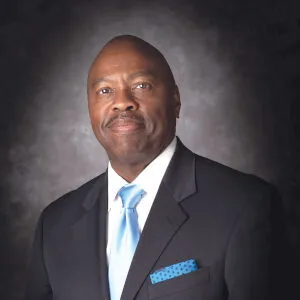
After an extraordinary active-duty career in the United States Army, Phil Washington retired as a disabled veteran with the rank of Command Sergeant Major, the highest non-commissioned officer rank an enlisted soldier can achieve. His military service included positions as a senior enlisted advisor to scores of senior military officers.
Upon military retirement, Washington joined Denver’s rapidly developing Regional Transportation District (RTD) as assistant general manager and held that position for nearly a decade before he was named chief executive officer. As CEO, he led the implementation of the agency’s multi-billion-dollar FasTracks light and commuter rail program. Under his leadership, RTD completed major additions to its rail system and revitalized the enormous downtown Union Station under budget and ahead of schedule.
Union Station is now the centerpiece of public transportation in Denver. Washington was also instrumental in implementing the nation’s first transit rail public-private partnership (P3) project; the $2.2 billion commuter rail line connecting Union Station and Denver International Airport.
Washington also served as CEO of the Los Angeles County Metropolitan Transportation Authority (LA Metro): leading an 11,000-person team serving more than 1.2 million daily riders. There, he oversaw more than $20 billion in capital projects. Underpinning the capital program was Measure M, a perpetual half-cent sales tax passed by Los Angeles County voters. Over time, it is estimated Measure M will create some 750,000 jobs and provide more than $133 billion in economic impact for the region.
Wherever he has served, Washington has leveraged his positions and his organizations’ status to benefit underserved individuals. At LA Metro, Washington led the establishment of the SEED School of Los Angeles County which became the county’s first college-prep boarding school for career readiness in transportation infrastructure. In his current position as CEO of Denver International Airport, the third busiest airport in the world in 2022, he is already well on his way to creating his legacy in aviation.
In recognition of his contributions to the industry and reputation for getting things done, Washington was awarded a Champion of Change Award by the Obama Administration, was named the 2013 APTA Outstanding Public Transportation Manager and was asked to serve as Captain of then-President-elect Joe Biden’s transportation transition team. Phil also is a past chair of APTA and created the nationwide Stand Up 4 Transportation initiative in 2015. President Biden later nominated Washington to head the Federal Aviation Administration.
Whether working at the highest levels of government, or at local levels of public service, Phil Washington has proven to be a public transportation leader dedicated to inclusive, accessible, and environmentally conscious transportation solutions.

Michael Allegra
Michael Anthony Allegra, retired president and CEO of the Utah Transit Authority, has spent over 40 years immersed in the rail world. Not surprising as both his grandfathers—Michael and Anthony—were in the railroad business. Combining that heritage with a fondness for skiing placed Allegra in an idyllic spot to create a world class transit system.
Both opportunities converged in the early 80s when the chance to develop Utah’s extensive network of light rail, commuter rail, streetcar and bus rapid transit met with the prospects of hosting the Winter Olympics. Allegra was in a unique position to see transit growth in Salt Lake City explode from a small, 100 bus company to more than 1,300 vehicles, while simultaneously running the most cost-effective system in the country. Rides per capita have quadrupled, and 90 percent of the population are now within a mile of good public transit. The Utah way of partnering was embraced and emboldened, leading to more than 15 successful public transit referendums.
Allegra spent most of his career at UTA, but from his first posting, as transportation planning engineer for the Wasatch Front Regional Council, he was working toward service equity, developing a planning program for elderly riders and those with disabilities.
At UTA, he continued his equity focus, building diverse teams, urging his accessibility commission to make sure rail travel was accessible to all riders, and encouraging women to step into key roles at the agency, resulting in more than 30 percent of all managers being women or minorities by 2013.
Climbing his UTA career ladder from manager roles in planning and engineering to chief development officer, then president and CEO, Allegra improved efficiency, reduced costs, become a model of operational transparency, and built the Salt Lake City area’s rail service, essentially from scratch. The 140 miles of rail built during his tenure included his goal of “70 miles of rail in seven years,” which was completed in just over five years. Every major capital project he oversaw was delivered ahead of schedule and under budget.
Very active in APTA, Allegra has served on the Executive Committee, the Board of Directors, the Business Member Board of Governors and the Planning and Policy Committee, where he led the creation of safety improvement initiatives. He has earned numerous awards for UTA, including TSA’s Gold Standard Award in 2015 for achieving the highest standard of excellence in security.
Allegra retired in 2016 with three APTA Outstanding Transit System of the Year awards, in 1993, 2002 and 2014.

Paul J. Ballard
Since the age of 23, Paul Ballard has served as the General Manager or CEO of seven transit systems, including in Winston-Salem, NC; St. Louis, MO; Nashville, TN; and Fort Worth, TX. As past president of three private management firms, he supervised the General Managers of dozens of systems throughout the country.
Ballard has led the startups of three commuter rail lines in different parts of the country. Two of these, the Music City Star in Nashville, and TEXRail, from downtown Fort Worth to DFW Airport, were almost hopelessly mired in planning stages before Ballard got the projects moving, constructed, and put into service. He even brought TEXRail into service $100 million under budget. He guided his most recent commuter rail startup, Denver’s “N Line,” through the worst days of the COVID pandemic.
Ballard fosters a deep devotion to the collegiality of APTA and to its core principles. He has prioritized mentoring and supporting colleagues and employees. Having come through the ranks, beginning as a railroad brakeman and conductor, a bus operator, and a supervisor, he learned to value each employee, and he has incentivized several to advance their educational degrees. He continues to be rewarded by watching their career growth. Several of those he mentored are now CEOs or hold crucial positions in public transportation. They are current and future leaders of APTA.
The American Public Transportation Foundation (APTF) has honored Ballard as a Seven Diamond Fellow of its Scholarship Fund. His generous personal donations over many years have helped support students who are interested in pursuing careers in public transportation.
In addition to continual work on numerous APTA committees, he has studiously evaluated hundreds of transportation research proposals for federal funding as part of his work on the National Transportation Research Board’s TOPS, or Transit Oversight and Project Selection Commission.
Ballard retired from the Fort Worth Transportation Authority in 2019, but life after retirement eventually called him back to a second career as an interim CEO. His depth of transit experience made him the perfect transitional leader for systems undergoing change at the top, as CEOs retired or moved to other cities. The first was Denver’s Regional Transportation District (RTD) where, over nine months in 2020, he guided the agency through the worst of COVID-19. The following year, Trinity Metro in Fort Worth called him back to bridge an unexpected eight-month gap in leadership. In both cases, he assisted in recruiting permanent CEOs.
He is currently serving as Interim Executive Director/CEO of the North County Transit District in Oceanside, CA.
Paul Ballard’s hard work and can-do attitude toward difficult projects, spiced with a love for challenge, change and variety, have made him a voice of immense experience in the transit industry.

Sharon Greene
In her 45-year career, Sharon Greene has been a leader in nearly all areas of transportation, from highways and transit services, to commuter, intercity, and high-speed rail, to the freight industry. She is a strategic transportation planner, expert in infrastructure finance and has earned accolades for her innovative work in financing projects, both in the U.S. and internationally.
Most of all, Greene is now, and has always been, a woman with ground-breaking ideas. She was one of only two women in her graduating class when she received her master’s degree in urban planning from Harvard.
Greene has achieved many firsts: she managed the first federally funded multimodal alternative analysis for the I-5 Corridor, which included a multi-county and multi-agency commuter rail demonstration project; as the founding executive director of the Los Angeles – San Diego Rail Corridor Agency (LOSSAN), she oversaw the creation of the first-ever intercity rail Joint Powers Agreement in 1989; her work funding a $2.4 billion financial implementation program for the Alameda Corridor Transportation Authority combined a variety of sources from bonds to user fees, plus a federal loan that became the template for the Transportation Infrastructure Finance and Innovation Act (TIFIA).
Her financial expertise and innovations were particularly evident in her role as principal consultant and regional development manager of Southern California Regional Rail Authority (Metrolink), where she not only helped to create the joint powers board governing the five-county project, but also developed cost-sharing agreements for the $1.8 billion program for construction and operations.
Greene continued to find new strategies for developing funding for transportation clients worldwide as president of Sharon Greene + Associates, LLC, and as senior vice president and director of global financial consulting practices at HDR, to whom she sold her firm. Her detailed financial analyses earned her accolades from USDOT and FTA.
In her current role as managing partner at InfraStrategies LLC, Greene consults with transportation agencies on every aspect of their projects. She remains active in several research and improvement boards, in particular the Transportation Research Board, where she has the distinction of being the first private-sector member elected to chair the Transit Cooperative Research Program.
Greene has been active in APTA for more than 40 years, serving as chair of the Federal Funding, Finance, and Tax Policy Legislative Subcommittee; chair of the Business Member Board of Governors and co-chair of the Finance Subcommittee of the Intercity and High-Speed Rail Committee. She is immediate past chair of the Innovative Funding, Finance, and P3 Committee and has served on the Legislative Steering Committee, among others.
Among her numerous awards are being named by the Conference of Minority Transportation Officials as one of the 2017 Women Who Move the Nation and the APTA 2011 Outstanding Public Transportation Business Member of the Year award.

Julie Cunningham
Julie Cunningham served as the President/CEO of The Conference of Minority Transportation Officials (COMTO) from 2001 – 2014, leading the organization through unparalleled growth and development. COMTO is the leading national advocate for employment diversity inclusion and contracting opportunities in the multi-modal, multi-billion-dollar transportation industry.
Her commitment to service in the transit industry and ensuring opportunities for minorities and small businesses was inspiring. Cunningham was considered a visionary and elevated COMTO as an organization and its partners during her tenure in advocating for a level playing field, maximum employment and contract participation for underrepresented groups in transportation. Under her leadership, COMTO was awarded the 2005 Disadvantaged Business Advocate of the Year by USDOT.
Cunningham was a valued member of the APTA family. Before being named to lead COMTO, Cunningham was a Transit Board Member for the Laketran system in Ohio and a regional representative on APTA’s Transit Board Members Committee’s Executive Council.
She was instrumental in developing a formal partnership between APTA and COMTO in such areas as strategic planning, policy forums, and workforce development. She also served on APTA’s Diversity Council and helped launch a series of APTA-COMTO Assembly program sessions initiated at both organizations’ conferences, focusing on best practices and ways to enhance the sustainability of Disadvantaged Business Enterprises. APTA also worked very closely with COMTO to find ways to more broadly disseminate Transit Cooperative Research Program reports, and Cunningham spearheaded its very successful Ambassador program that is still in operation and growing.
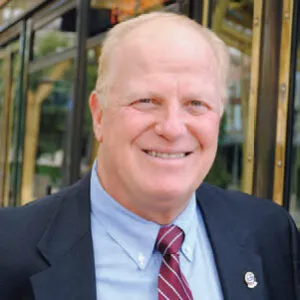
Joseph Calabrese
After earning his MBA, Joe Calabrese began his public transit career at the Central New York RTA (Centro) by intentionally learning from the bottom up. This allowed him to gain valuable experience in all facets of the industry. Throughout his career, Calabrese has strongly believed in improving the image of public transit by providing first-class service to customers.
Fueled by an entrepreneurial spirit, and with the realization that the industry lacked the ability to provide good customer information, Calabrese left Centro in 1986 to become co-founder of MetroVision, an organization that provides a real-time information platform for a number of the largest public transit agencies in the U.S. He returned to Centro in 1993 as Executive Director and President, with a focus on improving the image of the agency and enhancing customer service.
In 2000, Calabrese took the helm of the Greater Cleveland RTA, with an early task of leading the $200 million HealthLine BRT, the first nonrail project to receive FTA New Starts funding. This $9 billion economic driver has been credited with having the highest ROI of any public transit project of any mode in North America.
Calabrese was the first to champion the sale of naming rights sponsorships for public transit assets, and to offer a “ride happy or ride free” customer service guarantee, earning RTA the Lexus Customer Service Award. He felt strongly that leveraging best practices of the nation’s most successful companies was critical, leading to the adoption of programs such as “Transit-Stat,” and earning both ISO and Malcolm Baldrige certifications.
While at Cleveland, RTA was named by APTA in 2007 as the Outstanding Public Transportation System and Calabrese was named the APTA Outstanding Public Transportation Manager in 2008.
Calabrese was a key member of FTA’s BRT Taskforce, implemented several high-profile BRT projects, and soon became the industry spokesman for this mode. He urged APTA to help support BRT, leading to the establishment of the APTA BRT Committee, which he chaired for many years.
For APTA, Calabrese has chaired several other committees and has been an active participant on many more. He has also been a member of the APTA Board of Directors and chaired the Metropolitan Rail Discussion Group (MRDG).
Calabrese has served as President of both the New York State and Ohio Public Transit Associations and was an integral member of Board Leadership of the Transportation Learning Center. An extremely effective spokesperson for public transportation, he has testified numerous times before Congress and other legislative bodies on transit issues. Today, he continues to help others by sharing his transit system and BRT experiences as an employee of AECOM.

Mattie “M.P.” Carter
Mattie “M.P.” Carter was first introduced to public transportation in 1991 when she was appointed by the Mayor of Memphis, TN, as a Memphis Area Transit Authority (MATA) Board member.
Although she was unfamiliar with public transit, M.P. started to vigorously research the industry and meet the people working in it. That’s when she attended her first APTA conference, and she hasn’t looked back since. Soon, she became active with APTA’s Transit Board Members Committee and got to work. She served as Secretary, then Vice Chair, and finally, Chair of the committee. Meanwhile at MATA, M.P. was busy advocating for an increase in funding. Her rallying cry to government officials became, “Investment in Public Transportation is a win-win for everyone!”
In 2009, she became the APTA Chair and used the project “Telling Our Story”, as her theme. She collected stories from all 50 states of how public transit benefits and improves the lives of its riders and their communities, promotes business, and reduces their carbon footprint.
Her tenure as Chair ended with an event on Capitol Hill, with buses wrapped in the “Telling our Story” logo. APTA members and staff were joined by members of Congress and advocates from across the country. They also met with many members of Congress, including the office of the Speaker of the House Nancy Pelosi. It was a historic and spectacular event and served as a model for subsequent advocacy events.
M.P. Carter’s board member role extended from 1991 to 2014 and during that time, she never stopped advocating and encouraging funding for public transit. When asked what her motivation was for supporting and advocating for funding for public transit without complaining for 23 years, her answer is always a quote from Maya Angelou, “If you don’t like something, change it, if you can’t change it, change your attitude, don’t complain.”
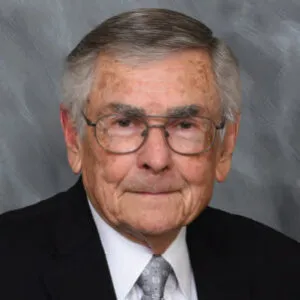
Jim Srygley
Jim Srygley has had a long and distinguished career in public transportation, and has been an active member of APTA for more than 50 years. His interest in transportation dates to a graduate engineering project at Stanford University at which he had been awarded a Ford Foundation Fellowship in Engineering Economic Systems—one of the first multidisciplinary programs combining engineering, statistics, economics, and computer science.
Using his advanced design capabilities and leadership, Srygley made significant contributions to the efficiency and safety of public transportation.
In 1970 he founded S & A Systems, Inc. and developed the concept for the FLEETWATCH System. He has been a pioneer in the design and application of computer hardware and software to monitor transportation equipment and processes, which has completely transformed the transit industry. He holds several United States patents for transit-related products he has designed.
Srygley has been responsible for equipment and software that is currently in use by more than 85 transit agencies throughout the United States. In addition to equipment in bus garages, vehicle-mounted equipment based on his designs is installed on over 30,000 buses, rail cars, paratransit vehicles, and non-revenue vehicles. These products provide tools which allow agencies to operate more efficiently, reduce road calls and overall maintenance costs, accurately schedule safety inspections, and quickly detect fluid leaks in vehicles and underground tanks.
In his early career, Srygley served as an advisor where he developed mathematical and computer simulation models to assist in planning and implementation of rail and fixed guideway systems, including projects for BART, MARTA, Denver RTD, and the Dallas/Fort Worth Airport. Based on his experience with large-scale computer programs, Srygley provided his expertise in the implementation of the first computerized Run Cutting and Scheduling (RUCUS) program for agencies in Minneapolis and Cleveland. He also assisted the Dallas Transit System (predecessor of DART) in implementing the Service, Inventory, and Maintenance System (SIMS) programs.
Srygley was a major contributor to a multitude of APTA committees and task forces, with his quiet and effective presence. He was an active member of the Business Member Board of Governors and was awarded Business Member of the Year in 2010. While on the Awards Committee, he was instrumental in developing the scoring criteria for transit systems still used today.
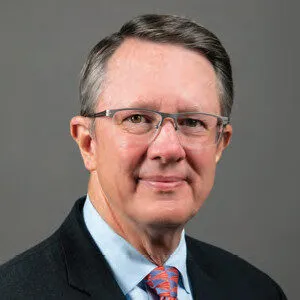
Gary C. Thomas
Gary Thomas’ public transit career literally started from the ground up as a project manager overseeing the design and construction of a Dallas Area Rapid Transit (DART) bus park and ride facility only a few years after the agency was formed. Working on a variety of DART projects as a consulting engineer, he moved from the contractor side to become the agency’s Senior Vice President of Project Management and was responsible for all capital projects and construction to bring modern, multimodal transit to North Texas. Three years later he was chosen by the DART Board of Directors as President/ Executive Director, holding that position for almost 20 years—the longest tenure of anyone in that role at DART and one of the longest in the transit industry among large multimodal systems.
As President/Executive Director, he set the vision for the agency’s 4,000 employees, emphasizing customer service and a commitment to stewardship of agency resources. There is likely no DART employee— and any number of elected officials or community leaders—who has not heard him say DART’s job is to “move people safely, efficiently and effectively and help them get where they want to go.”
Under his leadership, DART doubled its light rail system—twice—to become the nation’s longest, at 93 miles. The agency has been recognized for innovation in developing a progressive clean fuels program for its bus fleet, advancing new models for local bus and paratransit service, and customer-facing communications technology and service. DART is also a recognized leader in the global advancement of the Mobility as a Service (MaaS) movement with its use of targeted demand-response transit service matched with new customer tools for a more equitable fare payment system and trip planning.
Gary’s contribution to the transit industry and the development of the next generation of leaders has been widely recognized. In 2016, he was named APTA Outstanding Public Transportation Manager. In 2009, the Texas Transit Association recognized him as Outstanding Public Transportation General Manager. The Conference of Minority Transportation Officials (COMTO) selected him as Executive of the Year in 2009, and one year later the Texas Department of Transportation presented him with the Friend of Texas Transit Award.
While serving as DART President/Executive Director, his industry colleagues elected him APTA Chair in 2011-2012. He also served as chair of Rail~Volution and the South West Transit Association (SWTA).
Texas Tech University, where he graduated with degrees in engineering and architecture, honored him as Texas Tech Distinguished Engineer in 2016 and as a Distinguished Alumnus in 2018.
During his tenure at DART, the agency was recognized at all levels of the industry including APTA, SWTA, the Texas Transit Association, Regional Hispanic Contractors Association, Black Contractors Association, Design-Build Institute of America, MetroRail (Outstanding Transit System-Americas), and Light Rail Awards (Tramways and Urban Transit).
After retiring from DART in 2021, he joined Jacobs as the Transit Market Director–Americas.
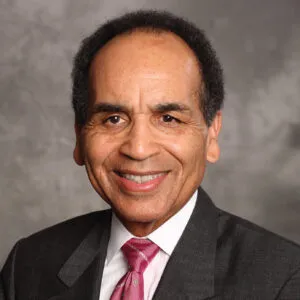
Delon Hampton, Ph.D., P.E.
Dr. Delon Hampton was a pioneer, particularly in advocating for further professionalizing engineering, by persuading more engineers to pursue graduate degrees. He also encouraged more minorities to pursue engineering as a career and to assume leadership responsibilities.
Delon earned a BS in civil engineering from the University of Illinois-Champaign Urbana in 1954 and went on to earn a Master of Science and Ph.D. in civil engineering from Purdue University. His career spanned 25 years in academia, including professorships at Kansas State University and Howard University. He chronicled his experience and challenges as an African American in the engineering field in his autobiography, entitled, A Life Constructed, Reflections on Breaking Barriers and Building Opportunities, which was published in 2013.
In 1973, while a professor at Howard University, Delon founded Delon Hampton & Associates (DHA) located in Washington, DC, at a time when there were few black-owned engineering companies. Under his leadership, the company grew quickly. One of its first projects was the Navy Yard Station for the Washington Metropolitan Area Transit Authority. DHA earned a reputation for integrity, excellence and accountability and expanded to include offices in Atlanta, Los Angeles, Memphis, Champaign-Urbana, Silver Spring and Baltimore, and grew to nearly 250 employees at one point.
Delon advocated that people must give back to their professions. For that reason, he accepted leadership positions at professional organizations. He served on the Board of Directors and Executive Committee of APTA, chairing the Business Members Board of Governors. He also served as chair of the American Public Transportation Foundation. He was elected the first African American president of the American Society of Civil Engineers.
Delon recognized that an excellent education made a big difference in his life and therefore he made a $7.5 million gift to Purdue University to dedicate the Delon & Elizabeth Hampton Hall of Civil Engineering. The hall is dedicated to his aunt who raised him.
Delon’s legacy is realized through the countless students he inspired to become engineers, and the hundreds of notable projects by DHA around the country.
Become a Member
Tell Us What You Think
Take Our Survey

Subscribe to the Need-to-Know News